Educational Game
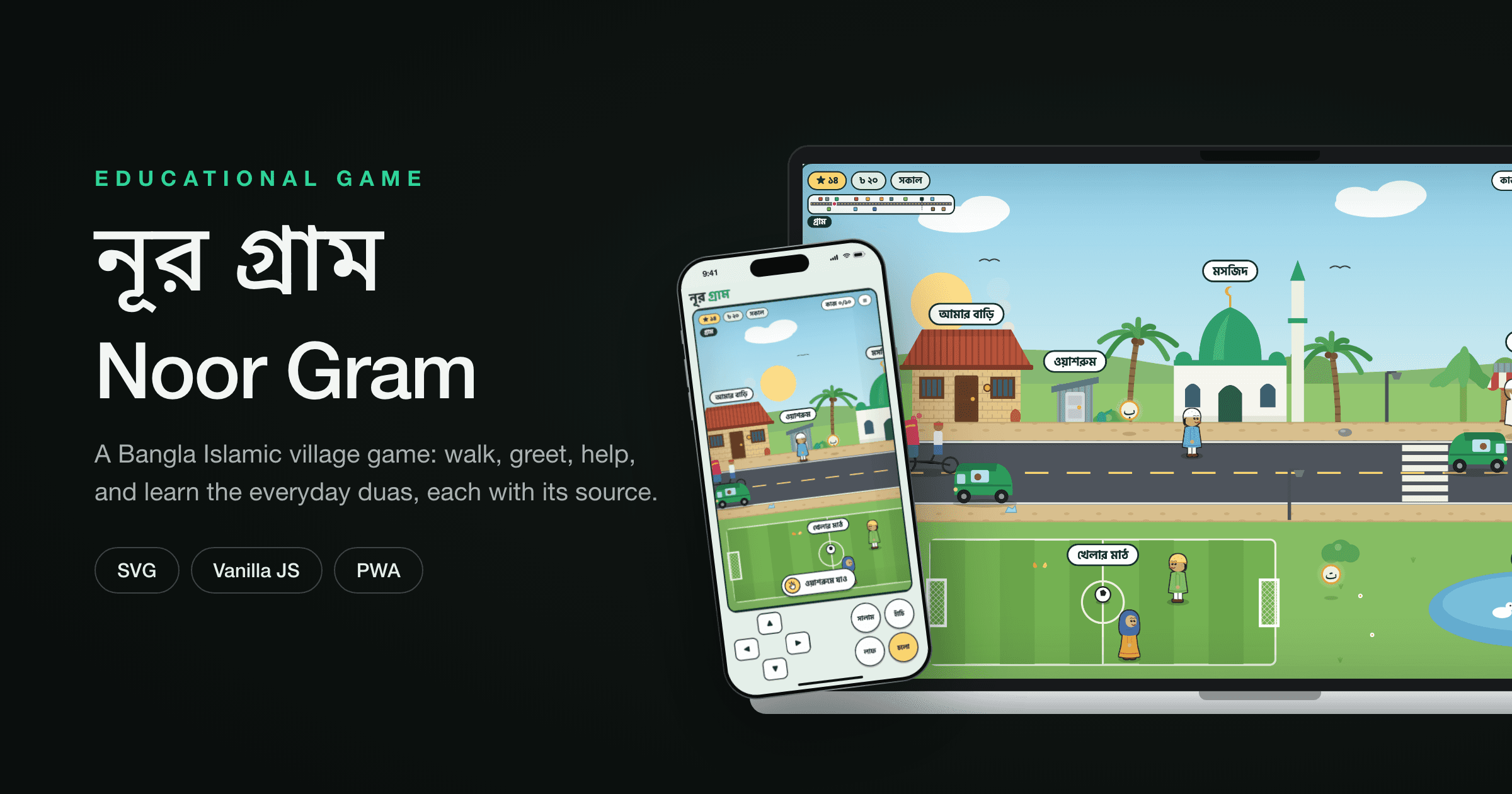
Noor Gram (নূর গ্রাম) — A Bangla Islamic Village Game
A browser game set in a Bangladeshi village, where you walk, greet neighbours and help out, and learn the everyday duas along the way — each one with its Arabic, pronunciation, meaning and source.
- Duas
- 49, sourced
- Places
- 10
- Episodes
- 4
- Frameworks
- None
Screens
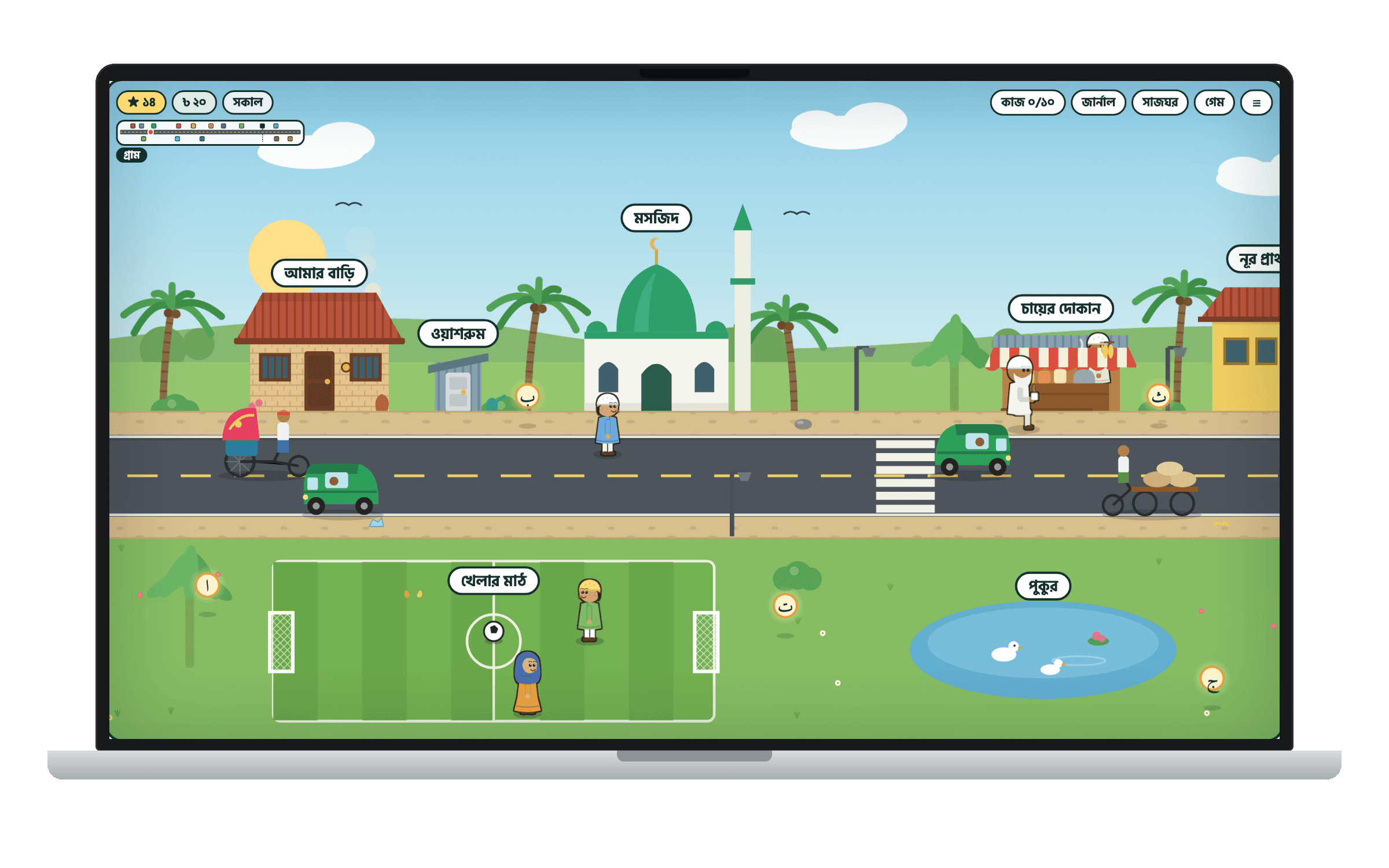
The village road: home, washroom, mosque and tea stall on one side, the playground and pond on the other. Everything here, characters included, is SVG drawn by code.
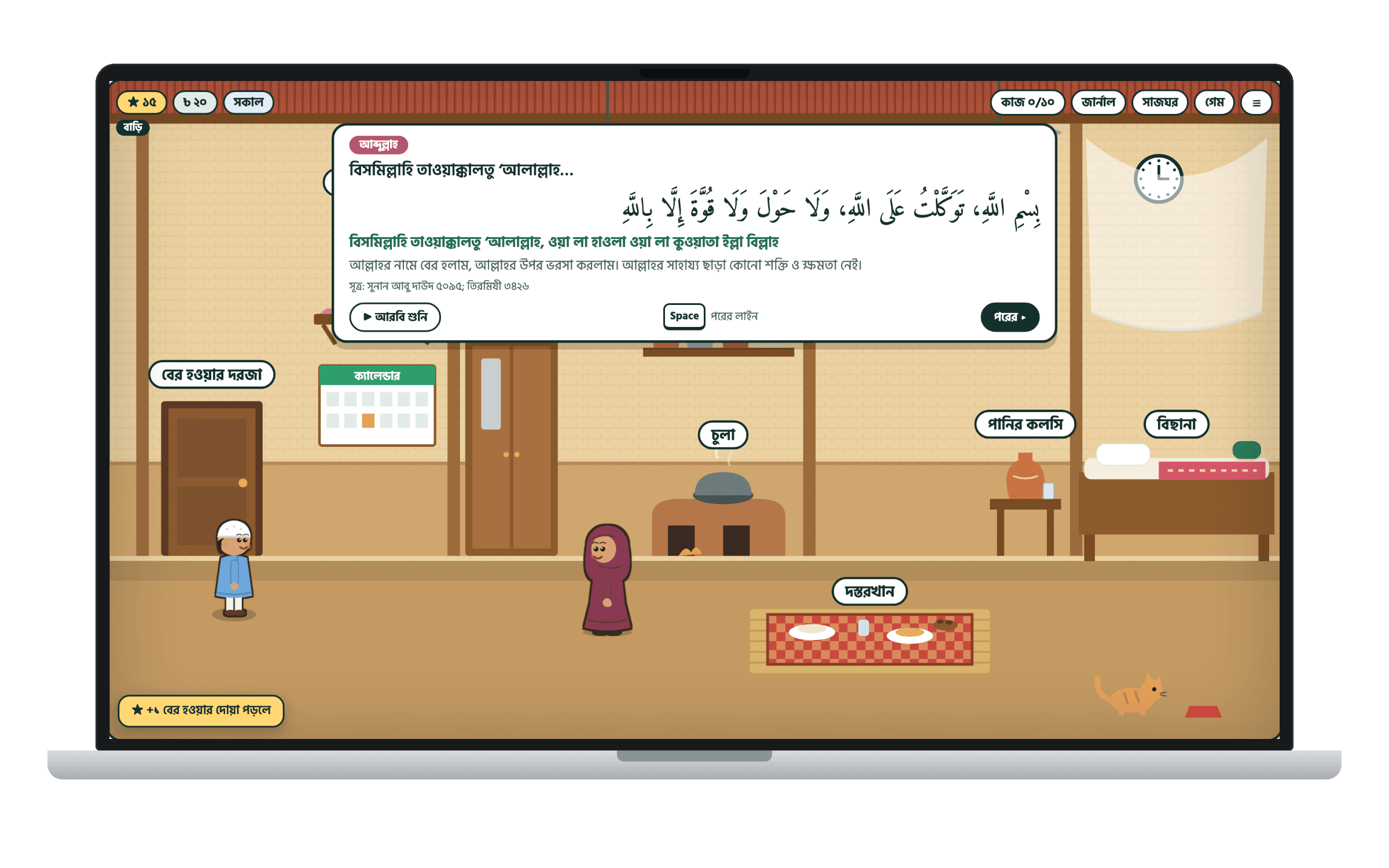
Leaving home. The game asks which dua comes first, then shows it with the Arabic, a Bangla pronunciation, the meaning and its source — and a star in the corner for getting it right.
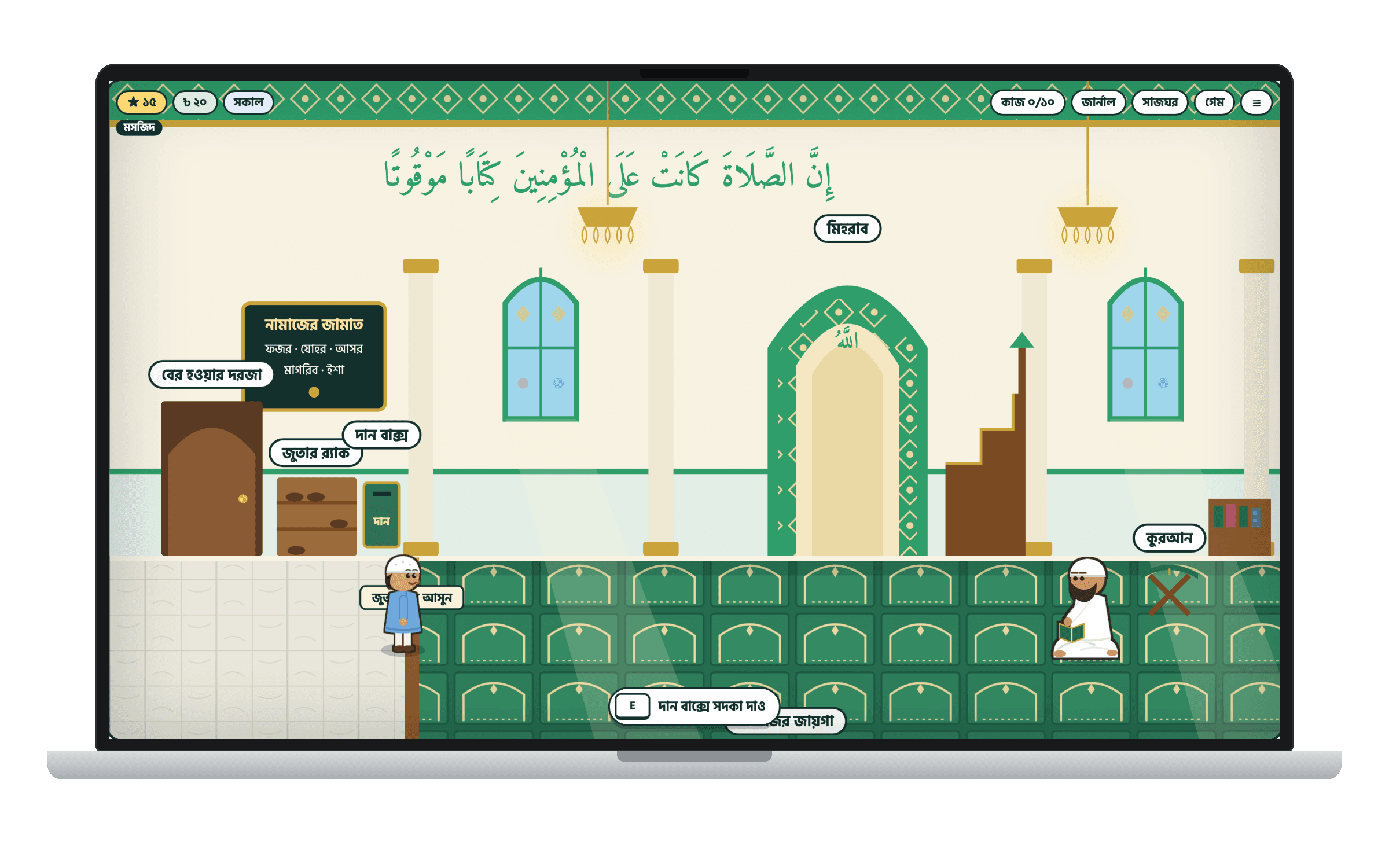
Inside the mosque, the first prompt is the shoe rack. Manners are taught the same way as duas: by being the thing you do next.
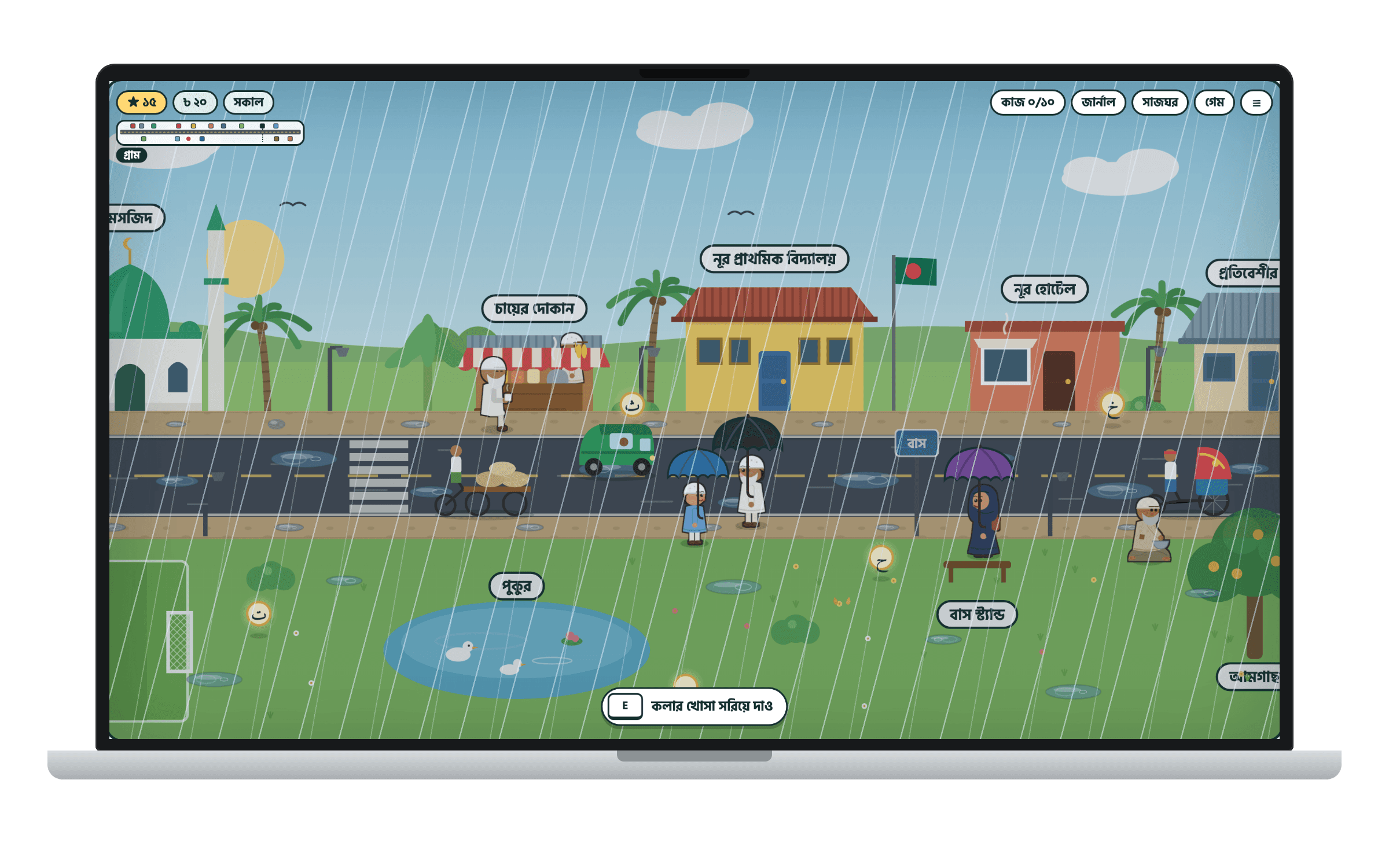
Monsoon. The ground darkens and puddles form, everyone outside carries an umbrella, and the rain itself prompts the dua for rain.
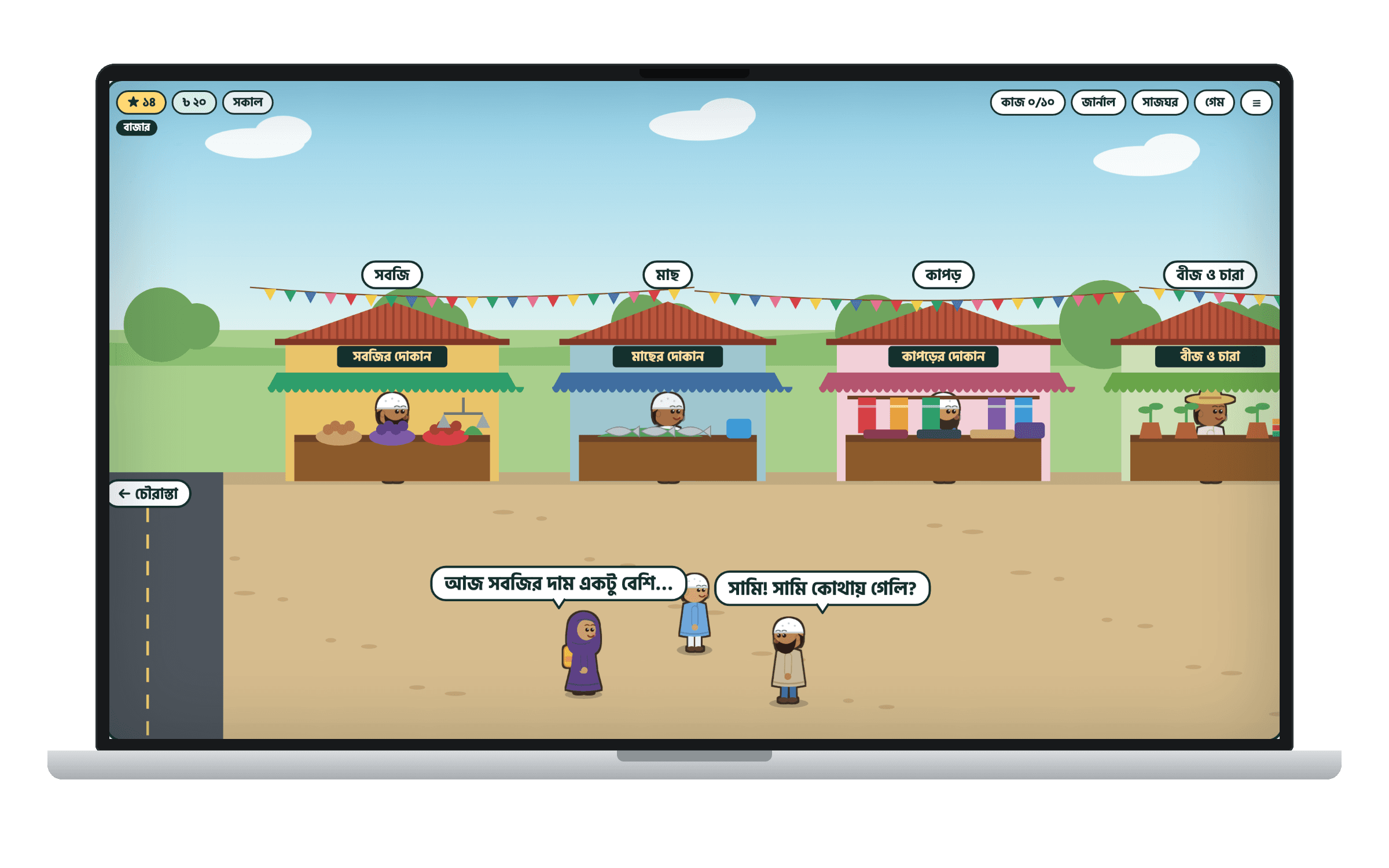
The bazar, a separate scene down the side road: four stalls with their own vendors, and an errand where the change has to come back right.
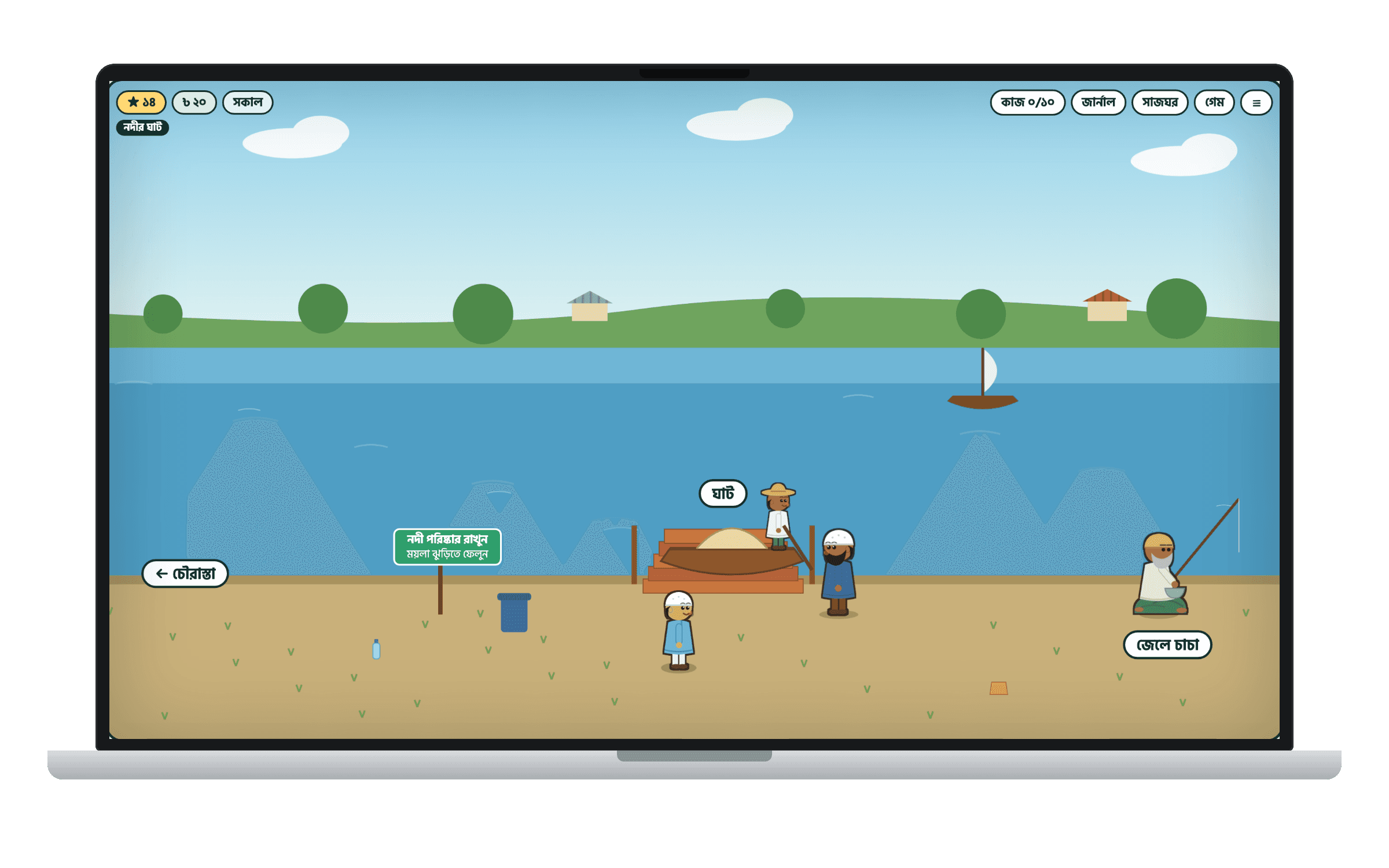
The river ghat, with the boatman, a fisherman and a sign asking people to keep the river clean — and a bin beside it for anyone who listens.
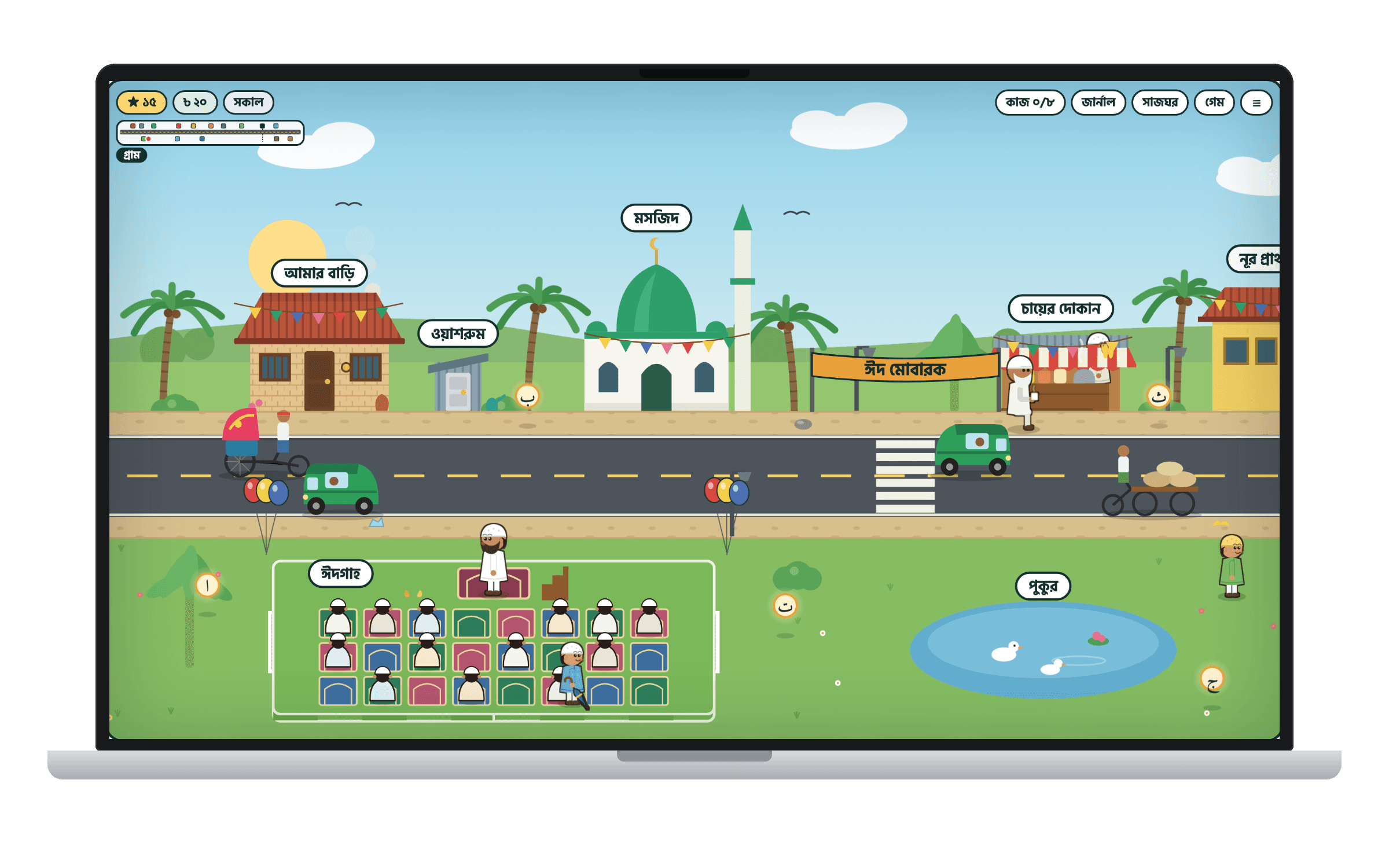
Eid morning on the same map: the playground becomes an eidgah, with the imam in front and the rows behind him.
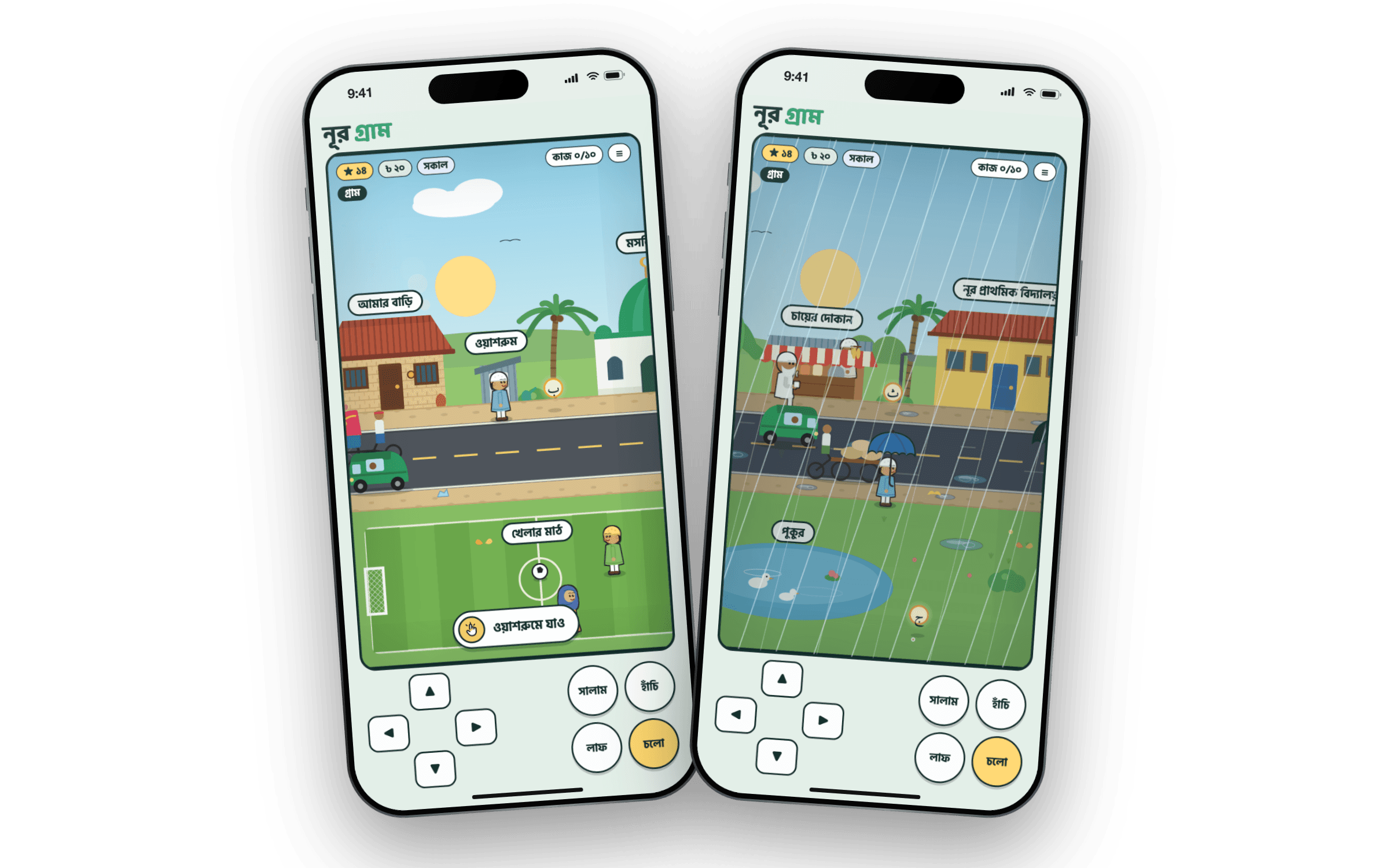
On a phone the game sits above its own controls, and the prompt to enter a door is something you can tap.
01Overview
Most dua apps are a list: a title, the Arabic, a translation, and nothing that ties the words to the moment you need them. Noor Gram puts them back into the day. You walk through a Bangladeshi village with the arrow keys, and the duas turn up where they belong — at the door on the way out, at the mosque before you step in, when the rain starts, when someone sneezes. The game asks what you would say before it tells you, and a good answer earns a star.
The one rule I would not bend is the sources. Each of the 49 duas carries its Arabic, a Bangla pronunciation, a meaning and a reference a reader can check, and nothing is written from memory. The dua list lives in one file shared by the game and a small recording studio page, so a qari can record each dua in the browser and the game picks the recordings up through a generated manifest; until then, the device's own voice reads the Bangla.
Everything is drawn in code. The village, its ten places — home, mosque, school, bazar, river ghat, clinic and the rest — and every character are SVG generated by JavaScript, with characters depth-sorted by their feet so people pass behind and in front of each other properly. There is no framework and no game engine: one HTML file, a day that runs from Fajr to Isha with the azan at each prayer, weather that brings monsoon rain with umbrellas and puddles or winter fog with a pitha stall, and four episodes — an ordinary day, Ramadan, Jumu'ah and Eid — that rearrange the same village rather than adding new ones.
It is built for a computer with a keyboard first, because that is where the layout breathes and the controls are simplest, but it plays on a phone with on-screen controls and installs as an app that works offline. Progress is saved in the browser; there are no accounts and nothing is tracked. A small build script turns the working file into the public site — stripping the debug tools, generating icons and share images, and writing the offline service worker.
02Key features
- 49 duas, each with Arabic, Bangla pronunciation, meaning and a checkable source
- Duas appear at the moment they are used: leaving home, entering the mosque, rain, thunder, sneezing, eating
- Ten places in one village, drawn entirely as code-generated SVG with depth-sorted characters
- A day cycle from Fajr to Isha, with the azan and a prompt to stop and answer it
- Four episodes on the same village: an ordinary day, Ramadan, Jumu'ah and Eid
- Monsoon rain with umbrellas and puddles, winter fog, and a pitha stall that only opens in the cold
- Four mini-games: ordering the steps of wudu, dua memory pairs, true or false, and hidden Arabic letters
- Keyboard-first on a computer, with touch controls and a full-screen welcome on phones
- Qari recordings made in a local browser studio and picked up through a generated manifest; Bangla text-to-speech until then
- Installable and offline through a service worker; progress saved locally, no accounts, no tracking